How to Choose the Best Makeup Lighting for Home in 2026?

Time:2026-10-12 Author:Charlotte
0%

Choosing makeup lighting for home in 2026 is no longer about buying the brightest mirror. It is about seeing accurate color, soft texture, and clean detail without harsh shadows. The right setup can make foundation look even and help prevent over-application. It should also feel comfortable during a ten-minute morning routine.

So, what is the best lighting for doing your makeup at home? Professional guidance points toward balanced, front-facing illumination with strong color rendering. The International Commission on Illumination recommends evaluating light through measurable qualities, including color temperature and color rendering. For makeup, a light source near neutral daylight, commonly around 4,000–5,000K, often gives a practical starting point. A CRI of 90 or higher can reveal complexion and cosmetic colors more reliably. These figures are useful, but they are not magic.

Energy efficiency matters too. The U.S. Department of Energy reports that LED products use substantially less energy and last far longer than traditional incandescent lamps. Grand View Research’s LED lighting market analysis also reflects continued growth in efficient, smart, and residential lighting solutions. That trend is shaping modern vanity lamps and adjustable bathroom fixtures.

Brightness alone can mislead. I learned this after using a powerful ceiling light that created dark eye sockets and a shiny forehead. It looked impressive, but it failed in practice. Light position, diffusion, mirror height, and wall color all influence the result. This guide compares those details, along with dimming, flicker control, portability, and realistic installation needs. No fixture is perfect. The best choice depends on your face, room, routine, and tolerance for a little trial and error.
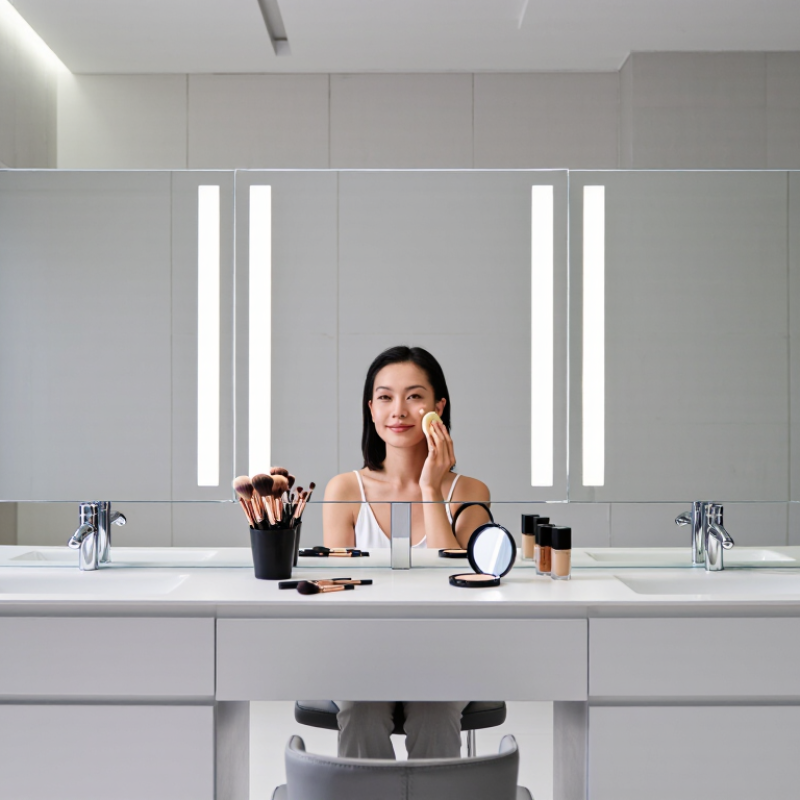
How to Choose the Best Makeup Lighting for Home in 2026?

Define Your Makeup Lighting Needs at Home

When choosing makeup lighting for home in 2026, define your daily needs before comparing features. Do you apply makeup at a desk, beside a window, or in a dim bathroom? Your location affects the light size, mounting style, and brightness required. A small face-level light may suit quick routines, while detailed foundation work needs broader, even illumination. Shadows around the nose and jaw can hide blending mistakes.

I once used a strong overhead lamp and thought brighter meant better. It did not. My skin looked uneven, and the mirror showed harsh shadows. A front-facing light with adjustable brightness worked better. Choose neutral light close to daylight, usually around 4000K to 5000K. A high color-rendering rating also helps you judge foundation and blush more accurately. Still, household walls can change how colors appear, so test your setup near the mirror you actually use.

Tips: Measure your mirror area first. Keep the light near eye level. Avoid placing it directly above your head. Check your makeup under another room’s lighting before leaving home. If your face looks flat, reduce brightness instead of moving the light farther away. If the color seems wrong, the setting may be the problem, not your makeup. A little trial and error is normal.

Compare Color Accuracy, Brightness, and Light Temperature

Good makeup lighting starts with color accuracy, not dazzling brightness. In my experience, a mirror can look impressive while quietly changing foundation tones. Choose a fixture rated CRI 90 or higher, then check its TM-30 values. IES TM-30 evaluates fidelity through Rf and gamut through Rg, offering more detail than CRI alone. A high CRI number is useful, but it is not a complete guarantee.

Brightness matters because uneven light hides blending errors. Aim for broad, diffused illumination across the face, rather than one small lamp above your forehead. For detailed grooming, many lighting professionals work near 500–1,000 lux at the face, depending on room finishes and personal vision. Measure it at your seated position. Do not trust packaging claims.

My own mistake was placing a bright light too close; it created hard shadows under my eyes.

Tips: Test three white surfaces beside your mirror. Look for neutral whites, clean skin tones, and minimal color shifts. Daylight-balanced light around 4,000–5,000 K usually feels practical for makeup, while warmer 2,700–3,000 K can make blush appear stronger. CIE 015:2018 explains how color appearance depends on spectral distribution, not temperature alone. That distinction is easy to miss. If possible, compare makeup near a window and under the lamp. Outdoor light changes constantly, so the match will never be perfect. Use dimming carefully; lowering brightness may alter perceived color and reduce confidence.

Choose Between Ring Lights, Lighted Mirrors, and Panel Lights

How to Choose the Best Makeup Lighting for Home in 2026?

Ring lights create soft, centered illumination around the face.

They reduce harsh shadows beneath the nose and chin. This design suits detailed makeup, livestreaming, and close-up tutorials. A 2024 technical review from the Illuminating Engineering Society notes that even facial lighting improves when brightness is distributed evenly. Choose a dimmable model with a color range near 4000K to 5000K. Avoid maximum brightness at close distance. It can flatten texture and cause eye strain.

Lighted mirrors offer the most practical daily setup.

Their surrounding LEDs illuminate both sides of the face, helping with eyeliner and foundation blending. Look for CRI 90 or higher. The International Commission on Illumination defines color rendering through CIE 13.3, while IES TM-30-20 also evaluates color fidelity and gamut. These measurements matter more than impressive lumen claims. Check the mirror’s published test data. Some products exaggerate performance.

Panel lights provide stronger control for larger rooms or uneven daylight.

Place two panels slightly above eye level, angled inward at about 45 degrees. This arrangement reveals uneven concealer without creating deep side shadows. The U.S. Department of Energy’s solid-state lighting reports identify LED efficiency and thermal control as major performance factors. In practice, heat still matters. My own setup sometimes looked accurate until daylight entered from one side. A window can quietly ruin the comparison. Use adjustable panels when precision matters, but choose a lighted mirror for speed.

Set Up Your Lighting for Even, Shadow-Free Makeup Application

Good makeup lighting starts with the face, not the fixture. At home, I look for broad, soft light placed directly in front of my eyes. This position reduces shadows beneath the nose, lips, and brow bone. A narrow lamp from one side can make blending look uneven. It may also hide redness until you step outdoors. That mistake is common.

Choose a light with adjustable brightness and a neutral white tone. Very warm light can make foundation appear too orange. A blue, harsh light may flatten color and exaggerate dry patches. If possible, place the light at eye level, about an arm’s length away. Keep the mirror close to the light, so your face receives illumination rather than backlight. A second light helps when one side still looks darker. Use matching settings on both sides.

Before applying makeup, test your setup with a clean face and a few expressions. Turn your head slowly. Watch for shadows under the chin and around the nose. I sometimes raise the light too high, thinking it looks brighter. It does not always help. A lower angle can reveal texture more honestly, though it may feel less flattering. Check the finished makeup near a window, then adjust only one product at a time. This small check improves consistency and prevents over-application.

Evaluate Safety, Adjustability, Space, and Long-Term Value

Choosing home makeup lighting in 2026 means judging more than brightness. Safety comes first. Look for enclosed wiring, stable mounting, low surface heat, and protection against accidental splashes. Keep cables away from the sink and never place a hot lamp against curtains. IEC 60598-1 provides a useful reference for general luminaire safety, although certification does not replace careful installation.

Adjustability matters because faces change under different conditions. A dimmer helps when daylight enters through a window. Color adjustment is also valuable, but extreme settings can mislead your foundation choice. The IES TM-30 method evaluates color quality more fully than a single color-rendering score. Aim for even light from both sides of the mirror, not a harsh ceiling beam. I learned this the inconvenient way. My first setup made one cheek look warmer.

Space affects usability. A narrow desk may need a slim vertical fixture, while a larger vanity can support two side lights and a movable fill lamp. Leave room for brushes, mirrors, and your elbows. Test the setup while sitting down. Lighting that looks attractive in a product photo may cast shadows when your head moves.

Long-term value includes energy use, replacement frequency, and repair options. The U.S. Department of Energy states that LED lighting can use up to 90% less energy and last up to 25 times longer than incandescent lighting. Still, I would not buy the brightest model automatically. A quieter, dimmable light with replaceable parts may serve better for years. Fancy is not always practical.

How to Choose the Best Makeup Lighting for Home in 2026?

A practical comparison of common home lighting setups using four decision factors: safety, adjustability, space efficiency, and long-term value. Scores use a transparent 1–10 evaluation scale and do not represent any specific company or brand.

For most home users, an LED panel pair provides the strongest balance because it creates more even facial illumination from two sides, offers adjustable brightness and color temperature, and can be repositioned as space changes. When choosing any setup, prioritize low-heat LED lighting, high color rendering, stable output without visible flicker, and controls that allow brightness and color temperature adjustment.

FAQS

What color accuracy should makeup lighting provide?

Choose lighting with a color-rendering score of 90 or higher. A higher score is helpful, not perfect. Check several white surfaces and your skin tone before deciding.

How bright should a makeup mirror light be?

Aim for roughly 500–1,000 lux at your seated face position. Broad, diffused light works better than one intense lamp. Too much brightness can create harsh shadows.

Why is light placement important?

Place light evenly on both sides of the mirror. Avoid relying only on a ceiling light. One-sided lighting can make one cheek look warmer.

What light temperature is practical for makeup?

Around 4,000–5,000 K usually feels balanced for daily makeup. Warmer light near 2,700–3,000 K may make blush look stronger. Color temperature alone is not everything.

Should makeup lighting be compared with daylight?

Yes, when possible. Check your makeup near a window and under the lamp. Outdoor light changes constantly, so an exact match is impossible.

Is an adjustable makeup light worth choosing?

Dimming helps when daylight changes. Color adjustment can also help, but extreme settings may mislead foundation selection. I once trusted a flattering setting too much.

How can I make makeup lighting safer?

Use enclosed wiring, stable mounting, and low-surface-heat fixtures. Keep cables away from sinks. Never place a hot lamp beside curtains. Small details matter.

How should the light fit a small vanity?

A narrow desk may need a slim vertical fixture. Larger vanities can use two side lights and a movable fill light. Leave space for brushes and elbows.

What should long-term value include?

Consider energy use, replacement frequency, repair options, and noise. Efficient lighting may last much longer than older bulbs. The brightest option is not automatically best.

How should I test a new setup before buying it?

Sit where you normally apply makeup and move your head slightly. Watch for shadows under your eyes and chin. Product photos can hide practical problems.

Conclusion

Choosing the right makeup lighting for your home begins with understanding your space, routine, and application goals. Ask yourself what is the best lighting for doing your makeup at home based on your need for accurate color, sufficient brightness, and a comfortable light temperature. Neutral, adjustable lighting usually provides the most reliable view of foundation, blush, and eye makeup without making colors appear overly warm or cool. Consider whether a ring light, lighted mirror, or panel light best suits your setup, budget, and available space.

A good lighting arrangement should illuminate your face evenly from the front or slightly from both sides, reducing shadows under the eyes, nose, and chin. Look for features such as adjustable brightness, flexible positioning, stable construction, low heat, and simple controls. A compact option may work well in a small room, while a larger setup can offer greater coverage. By balancing performance, safety, convenience, and long-term value, you can create a dependable environment for precise, comfortable makeup application.

Charlotte

Charlotte

Charlotte is a seasoned marketing professional with a deep understanding of the company's portfolio and a passion for elevating its presence in the market. With a keen eye for detail and a commitment to excellence, she ensures that our professional blog is regularly updated with insightful articles......